
UV printing vs. sublimation: what's the difference (and why it matters for your store)
By Michel Lindhoud ·
If you've browsed our product catalog, you have probably noticed that not every case is printed the same way. At Printeers, we use both UV printing and sublimation printing, two very different methods that yield very different results. Understanding the difference can help you pick the right products for your designs and set the right expectations for your customers. So let's break it down.
UV printing: precise, flexible, and cost-effective
UV printing is a direct printing technique that works by jetting tiny droplets of ink directly onto the case and curing them instantly with UV light. This instant curing is what makes UV printing so versatile: because the ink hardens immediately, it can be applied to all kinds of surfaces without smudging or sinking in. It is one of the only ways to print TPU cases, which is the dominant product in print-on-demand phone cases.
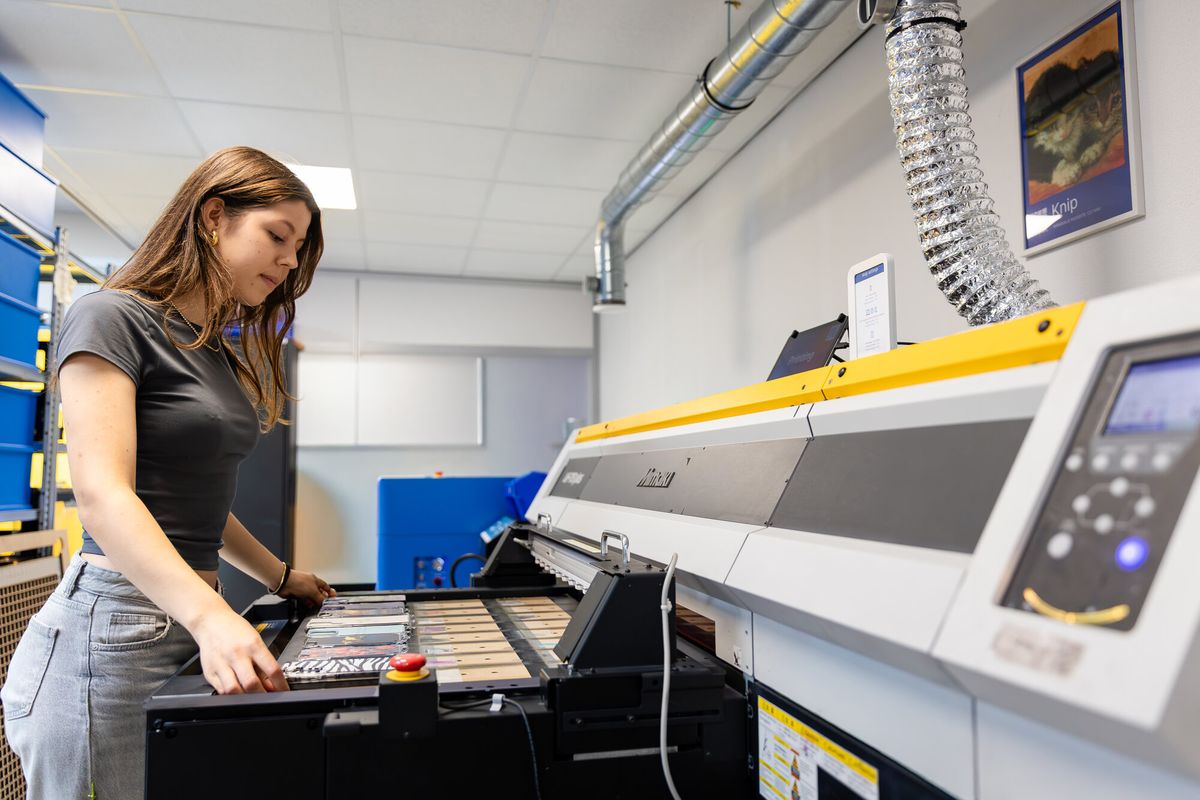
We use CMYK and white inks on all our UV printers. Some of our printers have extra colors (orange and red) for more detail in skin tones. The white ink plays an important role: it goes down as a base layer first, which is what allows colors to appear bright and accurate even on transparent or dark surfaces. The color inks are then printed on top. Your print will be high-definition, with a slightly raised feel and a matte finish.
The nature of UV printing allows you to be very creative and flexible with your designs: fine details, smooth color gradients, and transparent elements in your design can be achieved without any difficulty. Because we control the opacity of each pixel, even semi-transparent designs are possible when using UV printing.
At Printeers, we have been optimizing our UV printing process for years, allowing us to run production as efficiently as possible and keep costs low. This makes UV-printed cases an accessible option for any store.
Which cases use UV printing?
UV printing is our most widely used method and covers the majority of our catalog. This includes Soft TPU cases, Biodegradable cases, Hybrid cases, Crossbody cases, back-printed Hard cases, Wallet cases, MacBook cases, iPad cases, and AirPods cases.
The case materials across this range vary quite a bit: from flexible TPU (thermoplastic polyurethane), which is the soft, shock-absorbing material most people picture when they think of a phone case, to rigid polycarbonate for hard cases, to plant-based materials for our biodegradable range. UV printing handles all of them, which is a big part of what makes it such a versatile method.
Sublimation printing: smooth, vibrant, labor-intensive
Sublimation is a printing technique that uses heat and pressure to transfer the image onto the product. The heat turns the ink into gas, allowing it to fully embed itself inside the material. At Printeers, we use special film paper and an oven with a vacuum pump to allow the print to fully wrap around the case.
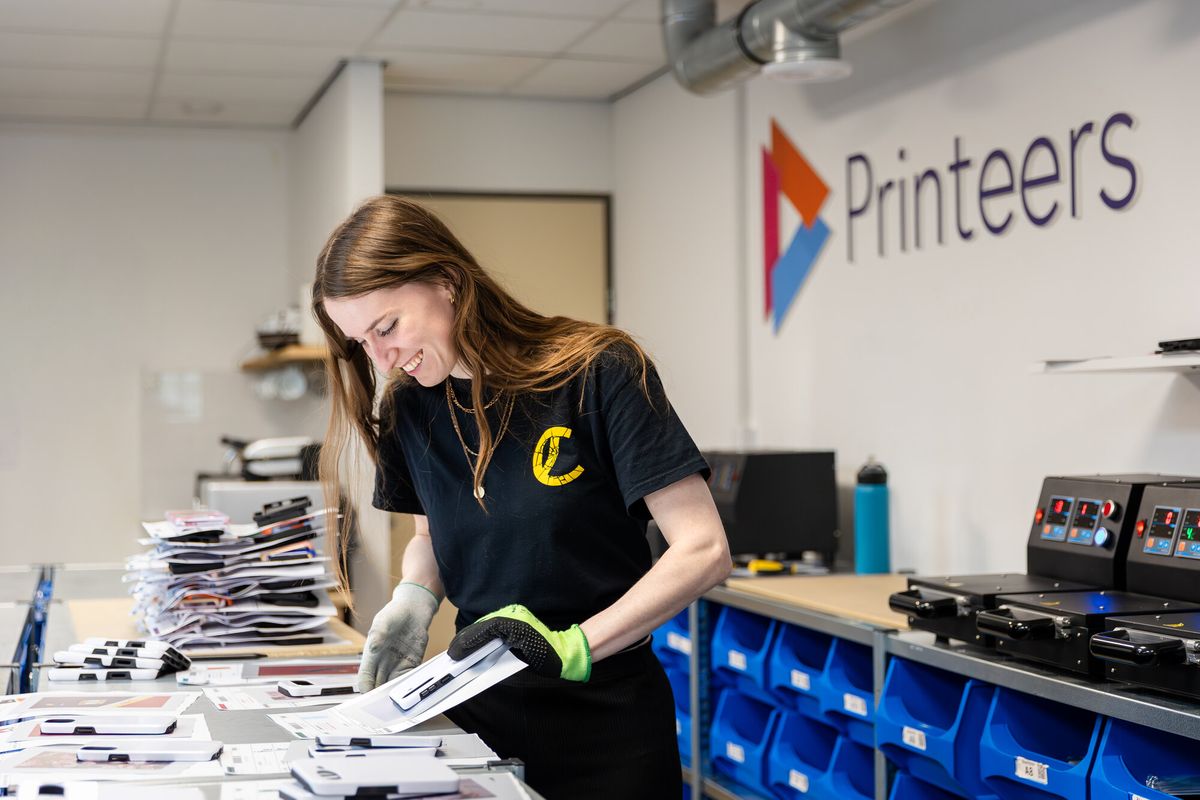
As the print becomes part of the material itself, sublimation printing provides a perfectly smooth feel that is scratch-resistant and holds up very well to daily wear and tear. The materials used ensure vibrant colors and a glossy finish. Combined with edge-to-edge printing, this creates a luxurious end result, as if printed on photo paper.
Since all sublimation cases are printed individually, and each case needs to be inside the oven for several minutes, this process is more labor-intensive than UV printing, which is reflected in the cost.
Which cases use sublimation?
Sublimation is used exclusively for our fully printed case range; these are the cases where the design wraps edge-to-edge across the entire surface. This includes fully printed hard cases, fully printed tough cases, and fully printed AirPods and AirTag cases.
The materials in this range are specifically chosen for their ability to absorb sublimation ink. Fully printed hard cases are made from polycarbonate with a special coating that draws in the ink during the heating process, which is what makes the print so vibrant and scratch-resistant.
Tough cases take it a step further with a dual-layer build: a polycarbonate outer shell (again, sublimation-ready) paired with a shock-absorbing TPU inner lining for added drop protection.
One thing worth knowing: sublimation requires a white base material to work from. Because the ink embeds into the coating rather than sitting on top, the base color directly affects the final result. This also means true transparency effects aren't possible with sublimation. If a see-through design is what you're after, UV printing on a clear case is the only way to get there.
Can you switch between printing methods?
The printing method is determined by the case material itself. TPU, for example, cannot withstand the heat of a sublimation oven, which makes UV printing the only viable option. Sublimation cases, on the other hand, need that heat to bond the ink to the polycarbonate coating, and UV ink would not achieve the same results. Therefore, it is not possible to switch between printing methods.
At a glance: UV vs. sublimation
| UV printing | Sublimation | |
|---|---|---|
| Print method | Ink deposited on surface, cured by UV light | Ink infused into material under heat and pressure |
| Finish | Matte, slightly raised | Glossy, smooth |
| Scratch resistance | Good | Excellent |
| Transparency effects | Yes | No |
| Edge-to-edge printing | No, back or front printed | Yes |
| Base color required | Any | White |
| Cost | Most cost-effective | Premium |
| Best for | Wide range of case types and designs | Bold, all-over designs with a premium feel |
UV or sublimation: which fits your store?
Of course, you can offer both UV and sublimation printed products in your store, as many of our partners do. But if you are just starting out or looking to focus, it comes down to a couple of factors.
If affordability is important to you, UV is the most cost-effective option, providing great quality at an accessible price point. Additionally, if you are interested in specialty products, such as Hybrid or Biodegradable cases, UV printing is the way to go. Do your designs have transparent or semi-transparent elements? Then UV printing on a clear Soft case or Hard case is the right choice for you.
If you are looking for a premium look and feel, with a glossy finish, sublimation is the best option for you. These cases can easily be positioned as an upsell alongside basic models if you want to offer your customers an upgrade. And if you want the best drop protection in our range, choose our sublimated tough cases.